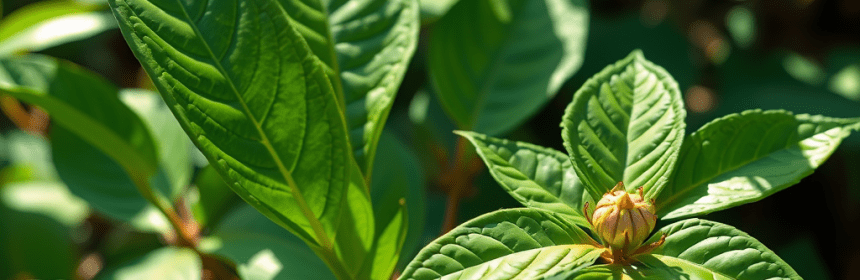
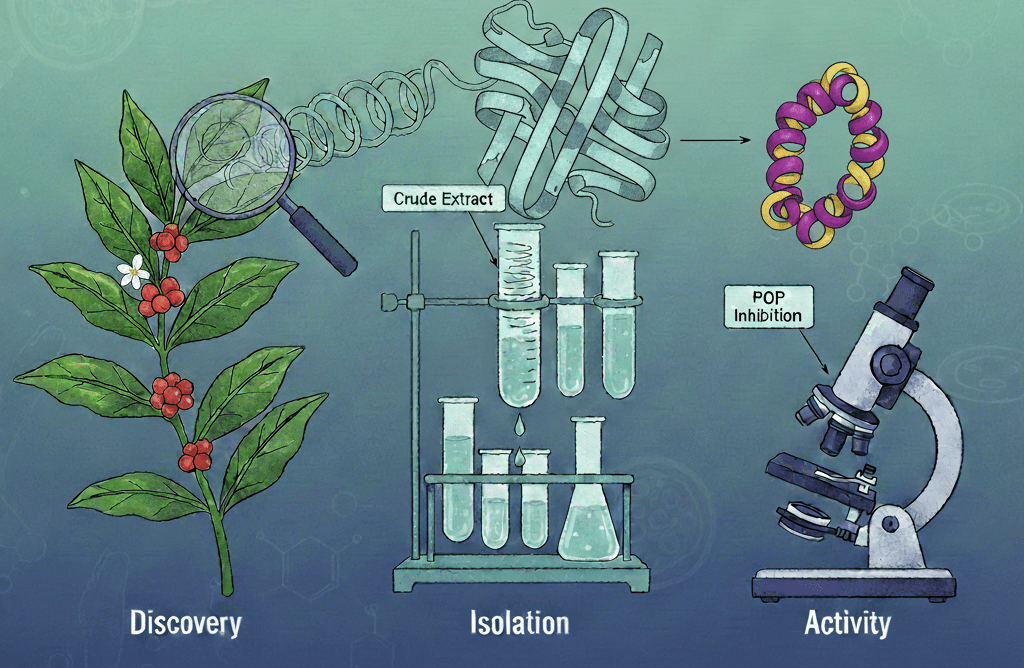
A new research article was published in the Journal Natural Products and Bioprospecting (IF 2024: 4.9). Hellinger et al. report the screening of eleven Psychotria species for cyclic cystine-knot peptides. Psysol 3 from Psychotria solitudinum was isolated as a prototypic inhibitor of human prolyl oligopeptidase. The synthetic peptide showed an IC50 = 1.3 µM and is thus one of the most active cyclotides known so far inhibiting the enzyme.
The Austrian Science Fund (FWF) project ZK-81B, PeptAIDes- Peptide Therapeutics for Autoimmune and Inflammtory Diseases officially ended with the 30.09.2025. The project’s final report is know available via the Science Radar provided by the Austrian Science Fund.
Over the past five years, the interdisciplinary Young Independent Researcher Group PeptAIDes has worked on fundamental questions in peptide science and the molecular and cellular mechanisms driving inflammatory or autoimmune diseases and cancer. Overall, the implications of this project span inflammatory and autoimmune disorders, metabolic diseases, cancer, renal injury, and pain management. We showed that natural peptides are promising molecules with drug-like properties and have implemented technologies to use them as bioactive probes or molecular scaffolds to prepare new bioactive molecules. We studied new approaches for computationally aided rational peptide design and implemented new peptide library synthesis approaches. We refined the molecular grafting approach using scaffold matching and structural model prediction workflows. Proof-of-concept data were established for new peptide therapeutics that alter immune cell transendothelial migration or peptide shuttle systems that enable the transport of therapeutic cargoes into the central nervous system. Other achievements include the characterization of novel therapeutic peptides that stimulate natural killer cells for cell cytotoxicity against cancerous target cells. In addition, we established a patient-relevant NK cell leukemia model that is being used for functional drug screening. The role of anti-malonaldehyde IgM antibodies in alcohol-related fatty liver disease was investigated, providing new insights into disease development and progression. We developed and patented an ‚AI-designed peptide-small molecule conjugate drug-discovery workflow‘ for the -opioid receptor, opening a promising avenue for non-addictive pain therapies. In summary, the implemented collaborative interdisciplinary strategy demonstrated how cutting-edge peptide science can be translated into meaningful preclinical research and applications in translational medicine while providing tools and workflows that empower the broader research community. Further studies will consider the safety and efficacy of the prepared probes to validate their application in a therapeutic setting.
In total 33 publications were achieved, with 8 data sets, 1 general policy, 2 new research methods developed, 21 scientific awards were granted to project personal.
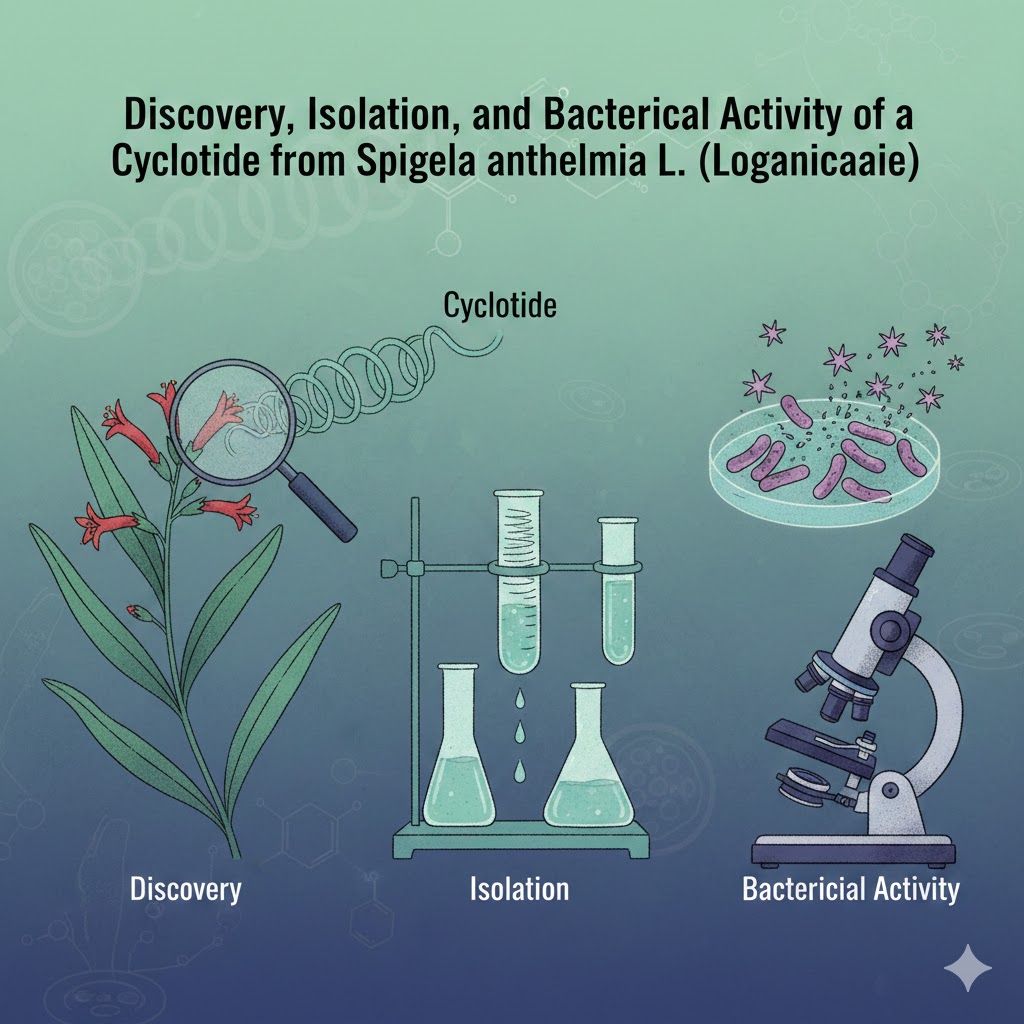
A new research article was recently published in the Journal of Natural Products (ACS). Akinleye, et al. investigated the expression of cyclic cystine-knot peptides in Spgelia anthelmia L. and studied their antimicrobial activity.
Our latest study ‚Engineering Peptide Modulators for T-Cell Migration by Structural Scaffold Matching‚ is online! Enjoy reading our article in the #Journal of Medicinal Chemistry.
An international consortium led by the PeptAIDes research team identified the peptide inhibitor of transendothelial T-cell migration (Pepitem) as a prototypic peptide with migration inhibition activity (read more about this topic in a comprehensive review article: Peptide modulators of cell migration: Overview, applications and future development). Using pepitem as a starting point and by developing the powerful structural scaffold matching approach, we generated the stabilized highly active probe VhTI-pep and showed its potency to reduce transendothelial migration of activated T-lymphocytes.
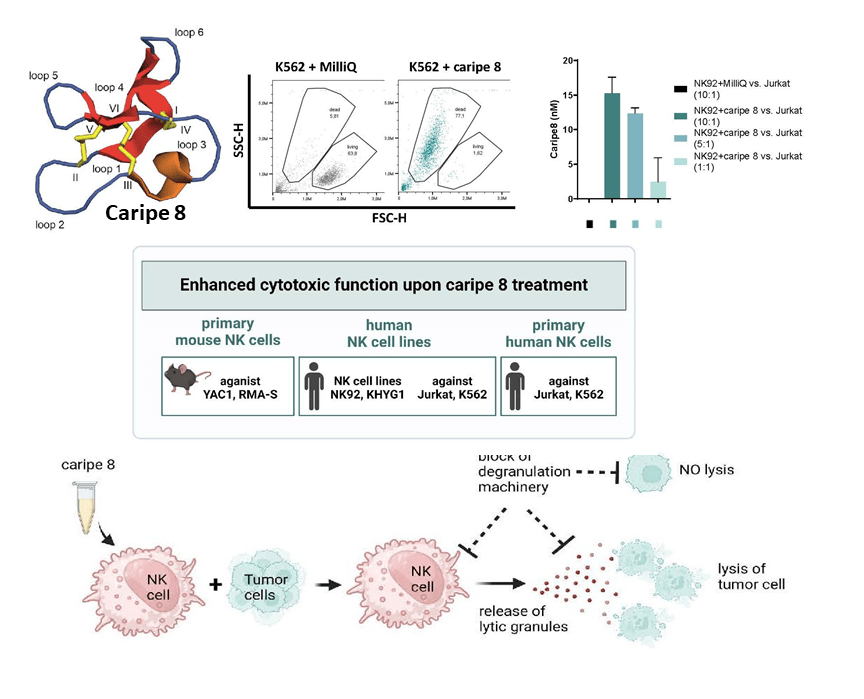
A research paper, entitled ‚Boosting the anti-tumor activity of natural killer cells by caripe 8 – A Carapichea ipecacuanha isolated cyclotide‚, was published in the Elsevier Journal of Biomedicine & Pharmacotherapy [IF 6.9, Top 5% in Pharm. & Pharmacy]. Here is the link to online version of the article: https://doi.org/10.1016/j.biopha.2024.117057.
In this research, plant extracts were found to increase the effectiveness of cytotoxic NK cells. The compound caripe 8, derived from Carapichea ipecacuanha, enhanced the function of both mouse and human NK cells, leading to tumor cell death. The authors observed that caripe 8 directly activated NK cells to induce tumor cell death.
List J, Gattringer J, Huszarek S, Marinovic S, Neubauer H, Kudweis P, Putz EM, Hellinger R.*, Gotthardt* G, Boosting the anti-tumor activity of natural killer cells by caripe 8 – a Carapichea Ipecacuanha isolated cyclotide. Biomed Pharmacother, 2024;177,117057. doi: https://doi.org/10.1016/j.biopha.2024.117057. * equally contributing corresponding authors.


 PeptAIDes